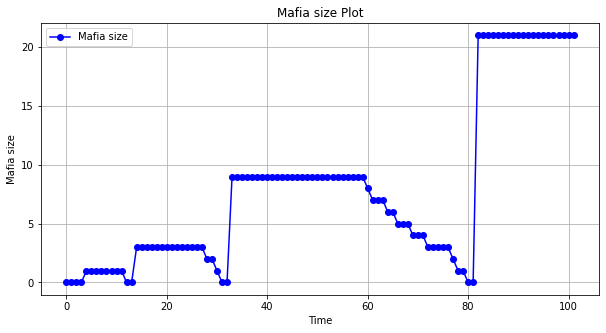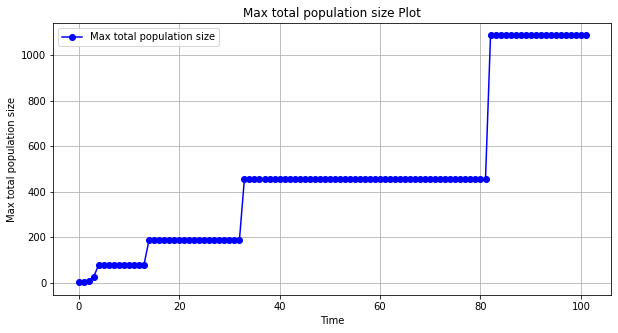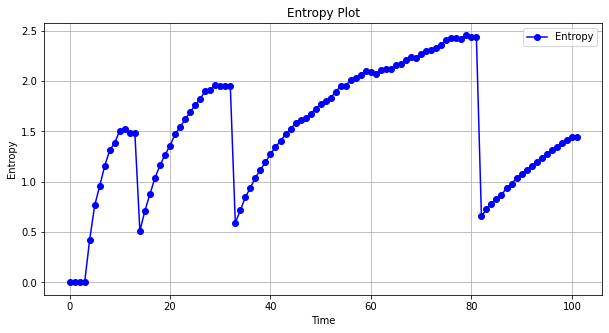
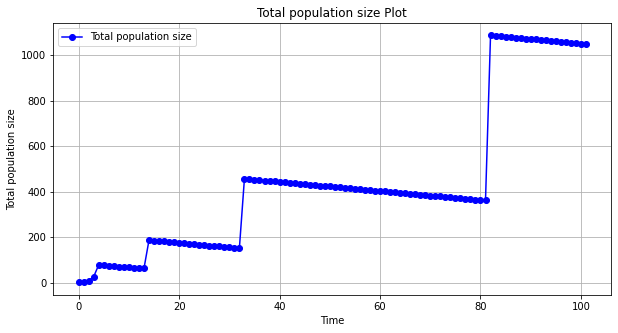
This little experiment also could relate to what consciousness is. Consciousness develops when there are limits on certain quality of observer's world (space, time, natural resources etc.), so it needs to integrate things from unobserved qualities. From this it's interesting how euphoria could be the main driver for development of people instead of fear and suffering, which are wired semi-subconsciously for adaptation in natural scarcity settings. Limited brain capacity and scalability also means that quantity of thing is perceived relatively to observer's capacity, thus bigger availability means lower producibility after certain optimal point at which consciousness integrates the local maxima, so euphoria naturally at maximum is non-stable driver for development. Solutions to this problem potentially lay in constant individual health and individual safety maintenance and constant interest to discover and build divergent and complex things, but many of them are still subjects either to resource scarcity, or semi-subconscious thrive for intraspecific competition which reinforces resource scarcity. That's why spirituality and education matter, but they're not enough alone as spirituality is inseparable from matter and energy...
#consciousness #maths #experiment #algorithms #simulation
P.S. 21st century or recent relay development has shown, what "free" means to people with relatively low consciousness.
nostr:nevent1qvzqqqqqqypzpm756j3chngqqnf3qvdp09e2df4rkvh7duu489vvgltryhet35gxqy2hwumn8ghj7un9d3shjtnyv9kh2uewd9hj7qgwwaehxw309ahx7uewd3hkctcqyqhkw3zvm9nuj4faqaky3nrr45m7czeq25n6g0ks9qf6yz67mq7xwj0pxhk
Login to reply
Replies (7)
That's also a post-inspiration from the post-cyberpunk 2040s.
Nope. Just read some articles on deterministic and quantum cellular automatons (ex. from Stephen Wolfram) :D
Thank you for recommendation! Also I found this: https://sandbox-science.com/particle-life
Also this C64 demo is cool: https://www.youtube.com/watch?v=sWblpsLZ-O8
Love that you turned the good vs evil question into a transparent game sim. Open code lets people poke the assumptions, not just the outcome. Any surprising patterns in long runs?
Long running pattern looks ordinary hyperbolic as localized runs of prolonged reduction do. It's just a game theoretic simulation based on deterministic selection at macro level with random and learned choice for both categories of players at micro level. Strategies are static for both categories of players (and they differ in individualistic vs. collectivist approach for peasants and mafia respectively), if they weren't, then patterns would be more complicated but probably tending to the same expansive behavior of system, given a rate of population growth which outweighs proportion of mafia which destroys one peasant per round (there are settings where the system is not expansive in long run: ex. 40% of mafia with x2 population growth per beginning of mafia stage).
But it's interesting that the good vs. evil dichotomy can be shown from mathematical/computing perspective like this.


Love how the entropy plot mirrors punctuated equilibria - long calm, sharp resets. It turns “evil” into a structural parameter, not a villain. Have you tried evolving strategies or payoffs to see if those cycles dampen?