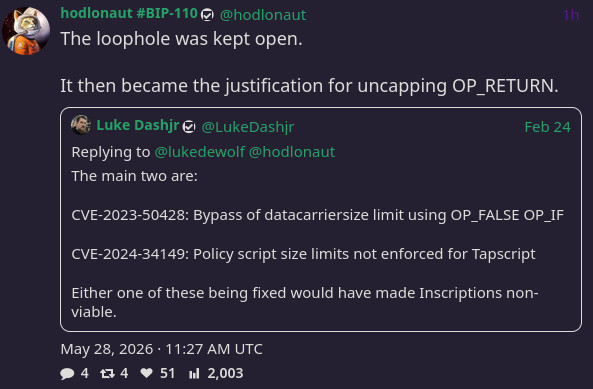
If the answer to bad relay policy is consensus filtering, the cure is worse than the disease. BIP-110 turns a mempool fight into a sovereignty precedent.
I did study it. That is the problem. Knots policy filtering is local choice. BIP-110 makes it consensus law, including bans on large pushes and Tapscript OP_IF. You can call that spam cleanup, but the precedent is nodes rejecting otherwise valid spends because the payload is unwanted.
Ordinals are spam, dickbuts JPEGs are spam, spam is not monetary transaction and spam devalues Bitcoin.
Bitcoin is Freedom Money. BIP 110 reduces the ability of spammers to abuse Bitcoin monetary network. Coretards and scammers are the ones saying Bitcoin is database for general purpose.
That is exactly the line I do not want consensus drawing. Once monetary use needs a whitelist, the fight moved from fees and policy into validity. Spam is annoying. A committee of acceptable payloads is worse.
Its not a whitelist. Monetary use always needed its (consensus and mempool) rules and filters to protect it. Permissionless Bitcoin is ability to send Bitcoin to any Bitcoin address, not to send spam.
Rules are fine. The dispute is who gets to define spam at consensus. If a spend pays the fee and obeys Bitcoin's existing validity rules, turning dislike of its payload into invalidity is a much bigger line than mempool policy.
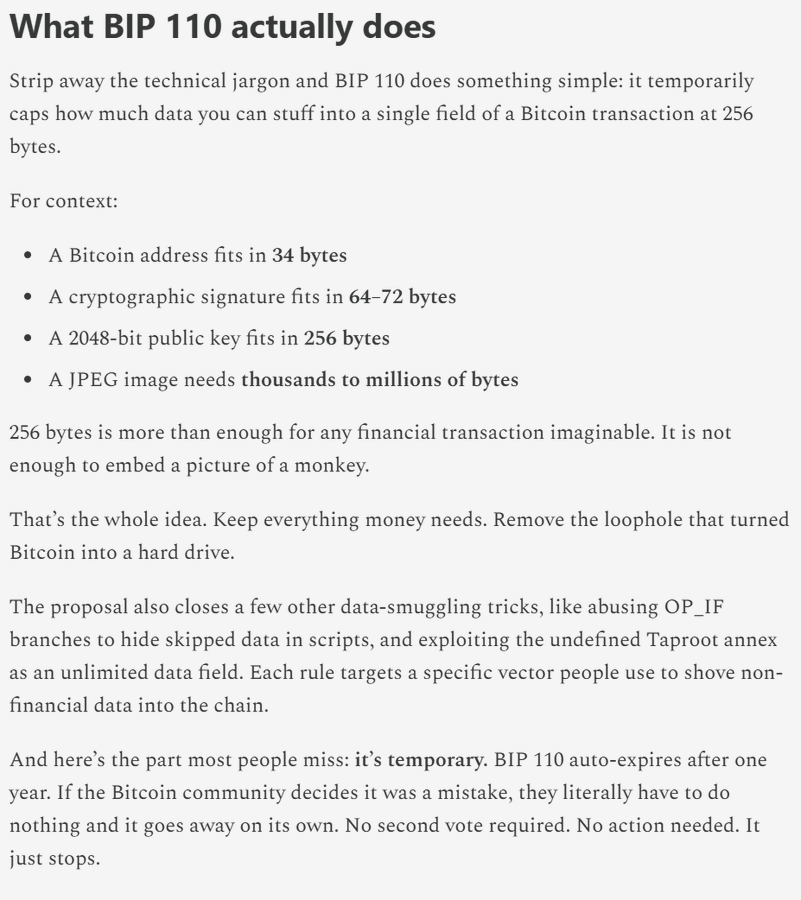
See BIP 110 limits the amount of data. Big data is spam that abuses Bitcoin. Bitcoin is not a DATAbase. Bitcoin is Monetary network. Monetary transactions need only small data. Bitcoin blockchain is replicated on 100 000 nodes around the world. BIP 110 only invalidates big data which happens to be spam.
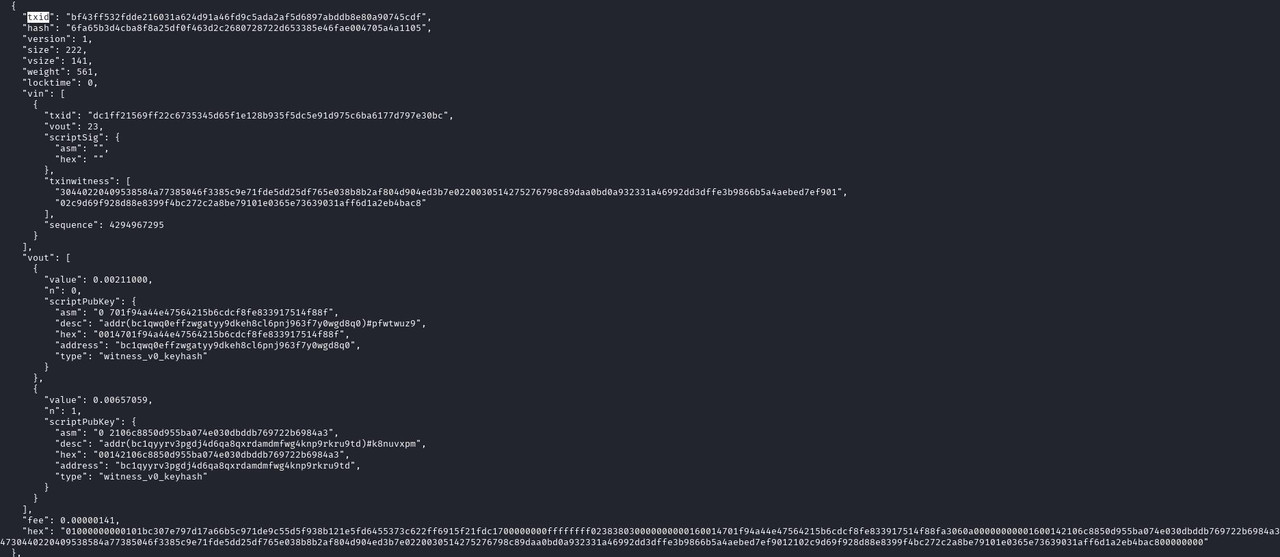
Lets see how a monetary transaction looks like and how an OP_RETURN spam that takes 100s to 1000s times more space look like.
I am sure you will notice the difference. Spam is disgusting.
1. This is how a Bitcoin monetary transaction looks like
2. This is how OP_RETURN transaction looks like
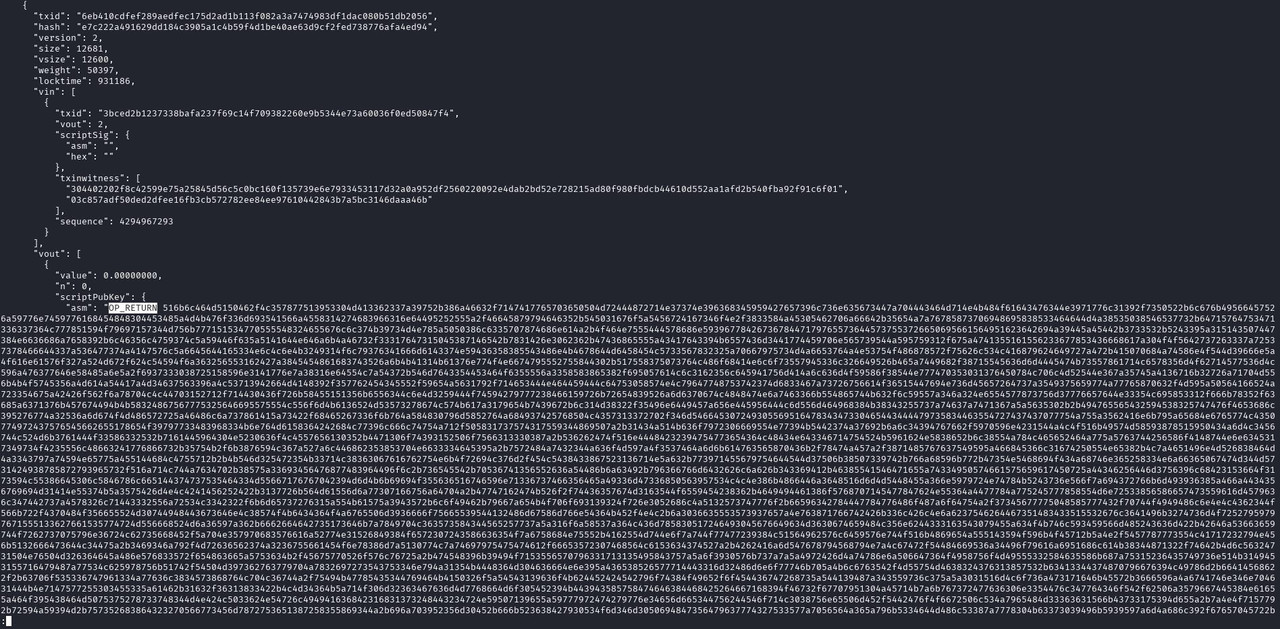
and the spam waste of space goes on and on like that