Fulcanelli agreed on page 1 of "Dwellings of the Philosophers". He wrote:
"Paradoxical in its manifestations, disconcerting in its signs, the Middle Ages proposes to the sagacity of its admirers the resolution of a singular misconception. How to reconcile the unreconcilable? How to adjust the testimony of the historical facts to that of medieval art works?
The chroniclers depict this unfortunate period in the darkest colors. For several centuries there is nothing but invasions, wars, famines, epidemics. And yet the monuments --- faithful and sincere witnesses of these nebulous times --- bear no mark of such scourges. Much to the contrary they appear to have been built in the enthusiasm of a powerful inspiration of ideal and faith by a people happy to live in the midst of a flourishing and strongly organized society.
Must we doubt the veracity of historical accounts, the authenticity of the events which they report, and believe along with the popular wisdom of nations, that happy peoples have no history? Unless, without refuting en masse all of history, we prefer to discover the justification of medieval darkness in the relative lack of incidents.
Be that as it may, it remains undeniable is that all the Gothic buildings without exception reflect a serenity and expansiveness and a nobility without equal. If, in particular, we examine the expression of statues, we will quickly be edified by the peaceful character, the pure tranquility that emanates from these figures. All are calm and smiling, welcoming and innocent. Lapidary humanity, silent and well-bred. Women have that portliness which rather indicates, in their models, the excellence of rich and substantial nourishment. Children are plum, replete, and blooming. Priests, deacons, Capuchin monks, purveyor lay-brothers, clerks, and chorus singers, all show a jovial face or the pleasant figure of their portly dignity. Their interpreters --- those marvelous and modest carvers of images --- do not deceive us and could
not be mistaken. They choose their prototypes from daily life among people who move around them and in the midst of whom they themselves live. A number of these figures randomly found in narrow streets, taverns, schools, sacristics, workshops, may be altogether marked or overdone, but in a picturesque tone, with a concern for character, for the sense of joy, for generous lines. Grotesque, you may say, but joyously grotesque and full of teaching. Satires of people enjoying laughter. Drinking, singing, and fond of good living. Masterpieces of a realist school, profoundly human and certain of its mastery, conscious of its means, and
yet unaware of what pain, misery, oppression, or slavery might be."
Replies (9)
I think he's right. Everywhere in the world now, we see an ugly kind of architecture and art. I can imagine someone saying that the medieval art was joyous to defy their circumstances, but the refutation is the art that surrounds us now - art everywhere celebrates a common theme of ugliness, and architecture expresses only bold planes and all tries to approach brutalism without being too obvious.
But if you go even further back in time, the joy in art is even stronger - Pan dancing while playing his pipes, or Dionysus laughing while drunk and surrounded by satyrs. That kind of art pops out in more dimensions that the geometry of the sculpture...
Its like the present is the lowest point in some fall from grace.
Yeah, modern architecture can be pretty sweet and we can engineer some pretty amazing structures but even the cool stuff we make seems to pale in comparison to the highest architectural achievements of the past.
Our modern buildings are often devoid of bas reliefs and sculpture and gargoyles and flying buttresses, etc.
Something Fulcanelli doesn't mention, as far as I'm aware, is that the French slang for Gothic art like what we would see decorating the old Gothic Cathedrals, is phonetically assonant with the word "architect". In French, Gothic art is "art Gotique" and the slang version is "argotique". Say argotique and architect a few times back to back and the assonance is fairly obvious.
Interestingly, Fulcanelli does point out that "argotique" is related to "argot" and Jason and the Argonauts. His study of Gothic art at Gothic Cathedrals demonstrates how esoterically informed the builders of these buildings were.
Something else he doesn't point out is that, even more closely related than argotique and architect are the words argot and the psychedelic fungus from which LSD is derived: ergot. Ergot is what the Eleusinian mystery initiates were consuming in the kukeon mint beer concoction that, as far as my research suggests, allowed the initiates to see the aura, the chakras, and the kundalini serpent which they would have understood as the serpent wrapped around the Orphic egg.
This rant is why I struggle sometimes to speak about my research extemporaneously. So many dots connect. This is why I had to start writing it all down to organize it all in a way that allows me to present things in a logical, lucid, cohesive way instead of coming off as unhinged and insane.
The unhinged insane version is usually where true genius resides, so please unleash that too. 😁 That said, this is definitely spot on and I hope this will be in a book soon so that we can also find out how fiat money (among other things) ruined architecture and gave us this brutalist nightmare that we now have to endure.
Thanks for the kind words. 🫶🤝
Have you checked out my third appearance on Once Bitten? Episode 562?
@Daniel Prince has graciously afforded me with opportunities to present my research. I’m sure I blew his mind with episode 562 and he’s not alone. That episode has netted me some extremely powerful positive feedback.
Fountain: Podcasts & Music
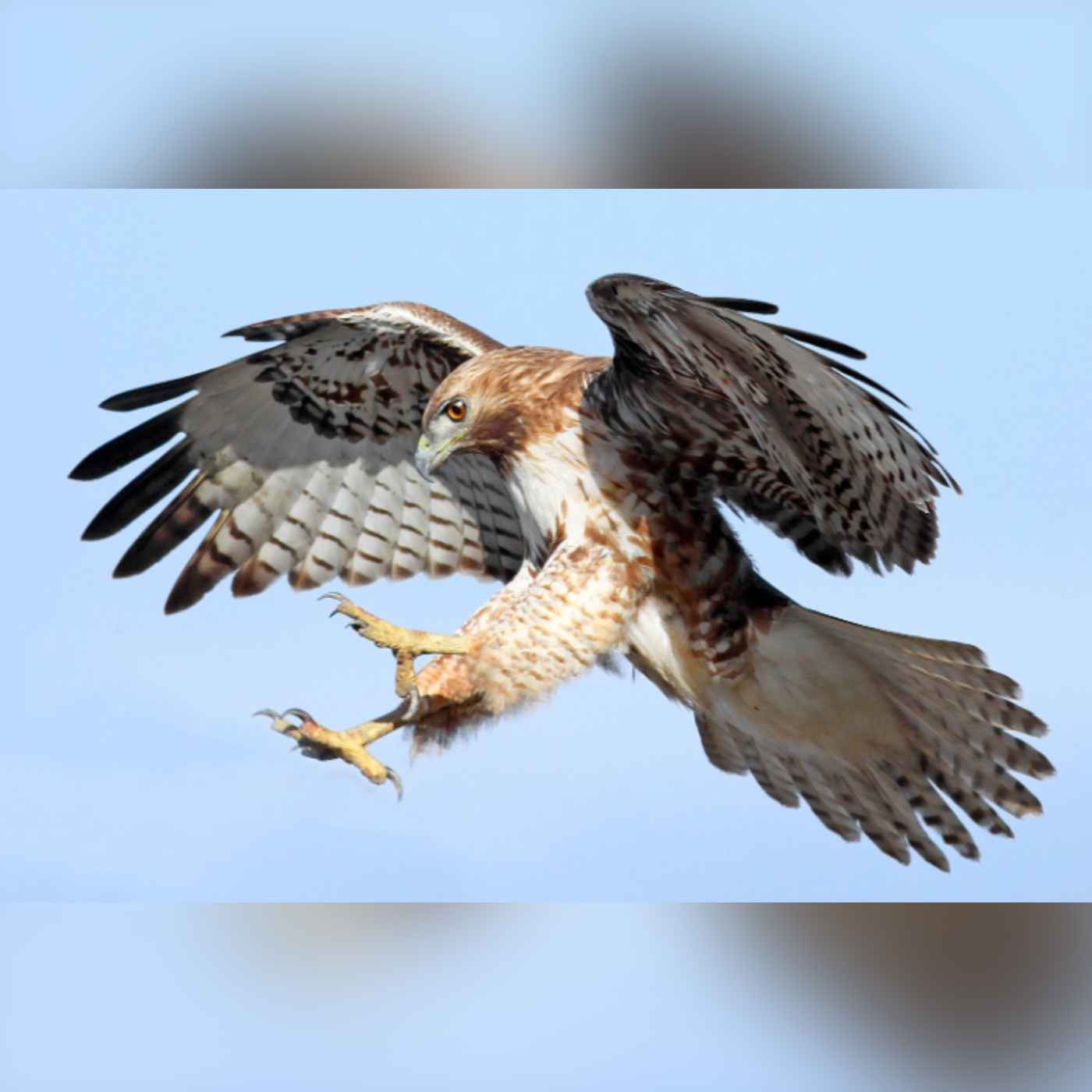
Once Bitten! A Bitcoin Podcast. • Stolen Science Series Part 7 - Decoding The Science Of Ancient Initiations. Red Tail Hawk #562 • Listen on Fountain
Were the ancient Egyptians using sarcophagi as sensory deprivation tanks to connect with other realms?
$ BTC 114,400
Block Height 914,272
Today's g...
I’m pretty sure I found the origin of the baptism initiation sacrament. Also, I’m pretty sure I can offer Brian Muraresku the teleology he lacks in The Immortality Key with respect to the psychedelics consumed at the Eleusinian mysteries as well as the spiritual significance of caves, hypogeums, the Osiris shaft, etc.
I presented elevator pitches of some of these ideas on DemystifySci’s secondary show: Paradigm Drift. The hosts are some serious gigabrains and my presentations were well received by them. They are much better scientists than me so if they didn’t call me out with any red flags, there’s a non-zero chance I am actually on to something here.
As for a book, yes, there is a book in progress. The subtitle of the book comes from Fulcanelli. It will be called “What’s in a Name?: The Language of the Birds”. The term I wrote about above, i.e. “argot”, is synonymous with “the language of the birds”. For the last 3 years, unknowingly, I have been translating the language of the birds…breaking the occult code.
Bitcoin definitely gets a mention. I wouldn’t be on this research bender if I hadn’t been given my name by a now deceased Native American Medicine Man who, at the time, was 90+ years old. I wouldn’t have had that remote encounter with Medicine Man if I hadn’t been orange pilling a libertarian discord server. A member of that server is Native American and after a year or so of shared experiences there, she offered to set up the remote encounter.
That experience changed my life. If my research is indeed accurate and based, that experience may change the world for the better by promoting understanding between people from different groups who might otherwise bicker and engage in violence against one another.
🙏🫡🪶
Wow! What a story! I hadn't listened to this episode yet but I am definitely going to dive in given everything you laid out above!! Looking forward to it actually. Given the small chunk of your work, as well as your general worldview that I came across here and in some of the pods you have done, I would say you're definitely into something yuuge! I pray that that your research and book will be a huge home run for you for the world is really lacking in terms of scientists of your calibre. We are drowning in the Fauci and Degrasse Tyson types 😭😭 Godspeed
With 3D printing and CNC machines there is no reason the average person can't realistically afford to sculpt their house with the same splendour of a mediaeval cathedral.
With AI image generators custom designs could be slopped on the wall of every home
Thanks for your support, friend. I hope we're both right, and I look forward to your feedback on my work. I hope you enjoy it. The world is on fire in more ways than one. Hopefully the next "black swan" is really a Red Tail Hawk :)
I've heard that 3D printer bots have been used to construct entire full-scale buildings already so I wouldn't be surprised if your prediction starts to come true as the technology continues to be developed and implemented.
Amen to that! Red Tail Hawk is up next, Let's go! 🚀🤝