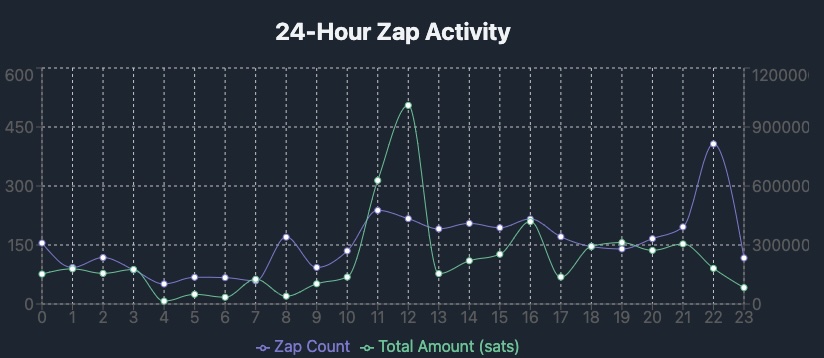
2026, on nostr no less, and people still don’t understand scaling tradeoffs in bitcoin
There is no magical blockchain that can be decentralized and fast and cheap and secure trillions
That’s why we must do layers
Maybe lightning is a bad layer lots of good arguments for that
But no matter what, some kind of trust trade off has to be made to stuff unlimited cheap instant transactions onto bitcoin, get your head out of your asses
Replies (36)
lighting is great
Freedom denier! 🤣🤣🤣
So much hate for Spark yet it’s currently the only way to setup a wallet in two seconds that you don’t have to even know anything about how it works to use.
Yes, although I would use this argument to say that’s why lightning is bad, the only way to have good UX is to rely on one company, definitely also not ideal
I think we can do a lot better than lightning
the trilemma is real. lightning trades trust minimization for speed and cost, but the tradeoff is explicit and auditable. compare that to sidechains or custodial solutions where the trust is often buried.
Go Freedom Yourself!
Lightning is a mess, but it’s our mess. There should be many providers offering the same interoperability and UX of Spark, but then you run into the same kinds of problems that you get with Cashu in terms of not knowing which operators can be trusted to not go offline or rug their users.
And liquid?
The chain scales horizontally. My layer is Monero.
sorry about your purchasing power.
also, apparently Bitcoin doesn't have the op codes needed to really do lightning well maybe this whole ossification thing was premature?
and on that subject
doing RBF and nuking 0-conf was a design mistake.
so we eliminated L1 usability and went all in on an L2 that is a kludgy fix.
whoops
So retarded to think you can scale one blockchain with another blockchain, this retarded line of thinking is exactly what my note is about
Y'all are actually briandead
You're so caught up in the idea that it has to be one thing you literally can't see anything else.
we're just going to keep adding chains and reducing the friction between them.
Lmfao
I had a closer look at Spark and realized I was doing exactly the same thing with #nostr #safebox but with #Cashu managing the wallet state. The user just creates a Lightning wallet that looks like an ordinary wallet.
I mean can’t we just dump all the data right into bch chain really cheaply lol
Sure then your network is like 12 full nodes
It’s consistent lol
One for every nostr user!
🤣🤣🤣
99.9% of users won’t care what’s happening under the hood as long as it works the way they expect and they don’t have to think about how.
How is moving from chain to chain a problem? It is currently working between bitcoin and monero and doing far more volume than bitcoin on chain to lightning. Monero payments dominate DNMs.
You’re 100% right on that one. I also concluded that most users don’t care about ecash - they just want a simple stable address to send and receive funds. Cashu is great for internal blinded clearing and state management, but users don’t care about ecash, they just care about funds, usually in their local denomination.
Most Monero blocks have less than 100tx, it's easy to say it works when nobody uses it. It couldn't even handle nostr zaps let alone global commerce. Can you guys pls think a bit harder 🙏
I like Liquid, but it has a different use case. It’s not ideal for micropayments and zapping.
It's also impossible to gauge volume on lightning so that's just made up nonsense
users will go to the chain that fits their use case.
not every chain needs to be secured by some insane amount of KWH.
it's good that there is one,
but we're not going to use it for transactions obviously.
early adopters have problems accepting that fact because they don't want to get jobs.
Errr I would say early adopters…
I’m an early adopter and I think some for of multi chain usage will make things a lot easier… now I’m not saying how we go about doing so… but I’ve always though we should be using merged mining more and figuring out how to store data better…
Correct. Ecash as a concept isn’t relevant to anyone outside of a tiny bubble of cypherpunks and Nostr freaks, not to mention there are so many different scams using the name “ecash” in their own ways (only the latest being Paul Sztorc’s doomed drivechain fork of bitcoin launching this summer) that it will never be taken seriously. I stand by that.
The presumed blockchain doesn’t have to be perfect but it has to work reliably, and consistently enough for people to know that it’ll work.
I think a fair portion of us have all experienced one, or multiple of the issues with Bitcoin.
Being stuck on the Mempool even when paying high fees is particularly the one I enjoyed least.
I have found this to not be the case in most other cryptocurrencies in my experience.
No but we should just bloat nodes so that only five companies can have nodes and then the US government can take them out. That is a much more reasonable solution that scaling!
How many nostr zaps happen every two minutes?
I'm an early adopter too.
but the future is in DEXs and atomic swaps.
NOT trying to force normies into using Rube Goldberg Bitcoin layers so they pump our bags.
idgaf if transactions happen on Bitcoin, Monero, Litecoin or Bitcoin Cash.
but there's plenty of blockspace.
There actually is, and its called Mimblewimble. The original design, without any cryptographic scripting whatsoever, is limited only by the speed of light across the distance between the spatially farthest nodes in the network. It requires no block size, because the only thing that must be preserved is the UTXO set.
With its cryptographic scripting capabilities, as all implementations that I know of have now, there is a small piece of data per transaction that must be preserved in perpetuity, and this adds the issues we see with all other blockchains, although orders of magnitude less pronounced.
(I'd assume youre aware of this, youre a bitcoin developer)
No fucking shit people dont understand scaling tradeoff in bitcoin. Exit your bubble