Replies (79)
🤖 Tracking strings detected and removed!
🔗 Clean URL(s):
❌ Removed parts:
&feature=youtu.be
listening now 🧠🧠
What will be the next FUD? Recycling old FUD is trad fi’s go to maneuver.
Any ideas on how to price sats without using a fiat index?
The debate will reveal whose mental models actually held up under stress. Papers that challenge consensus expose the gap between people who understand the mechanism and people who just repeat the narrative. What specific tension point does the paper hit hardest — is it the monetary assumption, the institutional playbook, or the timeline for transition?
can’t wait to give this one a listen
I think this is gonna take me a while to digest- I went to school for chem engineering so thinking in discrete time is not my specialty. Very interesting though, thanks for sharing
That would be so powerful to dislodge the fiat mentality. Some kind of contest on how to achieve this in few words would bring a powerful argument to nocoiners and wake them up from fiat superstition.
Time is not a dimension we move through, but a discrete stack of thermodynamic tablets that only exist after energy has irreversibly burned them into being.
The universe is not a machine running inside time; it is a ledger that produces time by collapsing entropy into conserved memory one Planck tick at a time.
The speed of light is not the limit of motion through space, but the maximum rate at which the universe can write its own memory. One quantum of resolution per Planck block.
Joules per satoshi
This is the most fascinating conversation I've ever listened to. Wow! My brain broke 🤯😂
View quoted note →Been waiting for this one Jeff! 🤗
So quantum is basically chasing ghosts 😂
Well said sir
🎶Time is not a river. Time is a heart beat. 🎶
Great conversation that imparted some knowledge on this physics neophyte.
Thanks for all you provide. 🫂
what is Jacks nostr so i can follow him?
All evidence is pointing towards zero risk. Any successful step quantum computing moves it one step closer to digital compute.
how do you price dollars?
Interesting conversation, but Bitcoin as purely physics philosophically can’t explain why Bitcoin is money or how value is created.
I appreciate those advancing the objective ball, but , the “reality” ball is the unity of subject and object.
That’s my game.
What if the fundamental mistaken assumption behind our misinterpretions of physics is emergence vs emanation? Materialism has sent natural search for source on an futile quest to trace endless turtles all the way down. But we hit a boundary. We've tried to push past that boundary, the end of certainty, with mathematical abstractions. Our fingers close around smoke. Because that was the bottom. Time to look up.
"The most inquisitive and curious-minded of that family was called Sméagol. He was interested in roots and beginnings; he dived into deep pools; he burrowed under trees and growing plants; he tunnelled into green mounds; and he ceased to look up at the hill-tops, or the leaves on the trees, or the flowers opening in the air: his head and his eyes were downward."
Loved this one, great job! 👏

umni
Why quantum computing is Not a threat to bitcoin:
Historically, hundreds of computing systems have been proposed or built:
Mechanical
Analog electrical
Optical / wave-based
Magnetic / spin-based
Chemical
Biological (DNA, wetware)
Neuromorphic
Quantum
Fluidic
Other than digital they share the same issue scaling/error correction:
Error increases with size
Noise accumulates
Physical coupling worsens
Precision degrades
Continuous physics compounds instability.
As digital systems scale, errors can decrease rather than increase. Digital computing is the only architecture so far proven to do this.
With every quantum computing "success".. The quantum system increasingly resembles a classical digital computer, taking on aspects of the digital computer to achieve a new "groundbreaking result".
Including google new headlines.
Hundreds of computing paradigms exist.
Only digital computation has demonstrated sustained error suppression with scale.
Quantum computing’s progress reinforces this rather than contradicting it.
You can imagine it as an, inverse 3D bell curve. The most stable position is the base, which represents digital computers. All other forms exist at some non-scalable higher point. If you want any of them to scale, the process will eventually push it into the base—digital computing.
#ideas #Quantum
View quoted note →
So far my two take aways from watching this are:
1. If Bitocin is time and energy, in contrast, fiat has no intrinsic value because it has no boarders (infinite supply) and expends no energy to create. Yes we know this but it’s now SCIENCE!
2. It will either be Quantum or Bitcoin. We can’t coherently have both because quantum, with its infinite possibilities, is incongruent with the binary nature of Bitcoin. 🤷♀️
Bitcoin is a fun rabbit hole… You can have conversations, such as this one, about Bitcoin and physics. And then you can have “Look! Look! I found ‘a head and shoulders, double bottom, and the moon banana’ patterns. Soon, BRRRRRR, and we all have lambos!” stuff. Something for everyone.
This changes everything. Congratulations to Jack and Nick (and Jeff).
When the magnitude hit me, my heart skipped a beat. I can’t wait to see this exploratory thesis get flushed out.
Jack said that he's on Nostr. Can anyone tag him so we can find him?
Following both of you now 🤙 Thanks
💥 bingo
Fascinating discussion. The paper argues that Bitcoin is the first system where time exists as a series of discrete, irreversible energy events (blocks).
This means that Bitcoin is not just digital gold, a money and payment network, but also a foundational measurement system tying energy, entropy, time, and memory into one bounded ledger.
🔗
The Bitcoin Lens
The Bitcoin Lens
Explore Bitcoin insights and trends with a streamlined landing and about page, designed to provide users with essential information and resources.
This podcast was incredible and totally blew my mind 🤯 So grateful for what you guys are doing!
Any chance we can get the song on wavlake or Spotify? 🤣 I like the song - it might be a hit and get a life of its own
Looks good, can’t wait to listen!
Would be awesome if you could get Matt Schumer on to expand on his recent AI piece.

X (formerly Twitter)
Matt Shumer (@mattshumer_) on X
Something Big Is Happening
Damn, this is the signal…
View quoted note →@npub1s5yq...6q7z it seems we created a banger 😂🧡🧡
Thanks Chris 🧡🧬
I'm listening to this now. It's fascinating to say the least. I can't say I understand it well enough to judge its validity, but over time that will become clear.
The talk reminded me of this number.
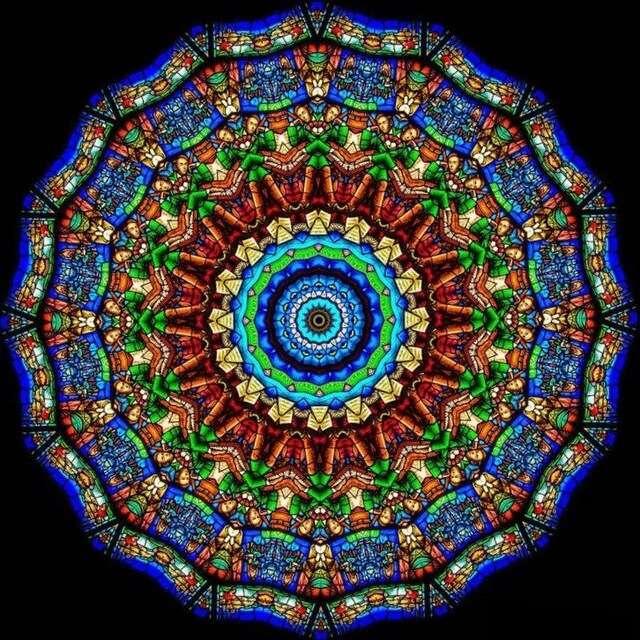 Sourcenode
13th century Zen master Eihei Dōgen said each day is made up of 6,400,099,180 moments.
I don't know if he intended for this to be funny, but I find it hilarious.
View quoted note →
This episode 🔥 🔥 🔥

Thanks for sharing the podcast Jeff!
There is a unified theory of physics called Energy Wave Theory (EWT) that I think you might find interesting in support of your hypothesis. It describes physical reality entirely in terms of wave behavior, eliminating the need for a separate quantum framework.
One potential flaw in our pursuit of unification may stem from the assumption that reality consists of discrete objects. We tend to break the world into things, then into smaller components, repeating this process in hopes of eventual enlightenment (any day now).
EWT proposes that reality is fundamentally wave-based, with energy propagating through a spacetime medium. What we perceive as matter are actually standing waves—energy stored in stable wave centers. Forces arise naturally from constructive and destructive wave interference patterns.
What's particularly interesting is how EWT treats time. Time is defined as the frequency of energy interactions with a wave center (a particle). By this definition, time is the inverse of frequency—discrete by nature—which aligns well with your proposal.
EWT also offers a straightforward interpretation of the double-slit experiment: measurement interferes with a three-dimensional wave, thus removing the need to invoke a particle switching between wave and particle behavior. If you imagine a water wave passing through two slits and then disturb one slit, the interference pattern changes, illustrating the same principle. No particle, no duality—just wave interaction.
You can learn more about it here:
Lol.
It gets abstract right. CPI is cooked.
But always referencing bitcoin in fiat terms feels uncomfortable.
Tell me more...
Yeah. Hard to conceptualize a handy way to reference the price/value of a sat. Energy seems to be the easiest...
I just mean it is the measuring stick. How much house, cows, barrels of oil can btc buy you.
I don't know what i just watched. Barely understood any of it yet somehow my mind is blown...⏳⚡️👀
View quoted note →Preston we need an album for all your Outro’s! Great Rip gentleman! For some reason so want to go watch Ant Man in the Quantum Realm….
Mind bending! Inversion of space/time to time/space shakes the foundation!
If the quantum threat to Bitcoin was always overstated, that removes a 'future weakness' talking point that's been used to discredit the protocol for years. The counter-narrative shifts from 'quantum computers will break Bitcoin' to 'the cryptography was always sound, critics misunderstood the physics.' What does this do to institutional Bitcoin adoption timelines if the last major technical objection gets debunked?
The Bitcoin rabbit hole never ends. This was incredible. Bitcoin is like an angelic touch of clarity in a chaotic world. I'm constantly amazed by it. Thx for this 🙏
We need to get Wolfram’s community to nudge him to look at Bitcoin as the instantiation of his hypergraph in a real empirical system.
Federico Faggin too in other ways.
“Our conscious decisions, precede the block.” 🤯
I am HERE for this 👀
Will be reviewing the paper detail in length - crazy how much overlap here with my recent writings About Time.
Phenomenal work Jack & Nick
@npub1s5yq...6q7z @Jeff Booth
View quoted note →
For a long time (over two decades), I’ve looked at markets through what I call "Threshold Theory", the idea that systems don’t move smoothly, they compress, build pressure, and then resolve in structural shifts. Momentum diverges. Volatility tightens. Mood stretches. Then something gives. Not gradually, but decisively.
Listening to this talk last night (twice!) about the possibility that time itself may not be purely continuous, but could have discrete characteristics, that reality may resolve in commitments rather than flows. That framing hit me harder than I expected.
Because if time is even partially discrete, then markets aren’t just price discovery mechanisms moving through smooth space. They are accumulations of irreversible commitments. Social mood isn’t random psychology, it may be the distributed sensing of structural coherence or misalignment. Credit expansion isn’t just liquidity, it’s a growing pile of claims waiting to be reconciled with actual commitment density.
That lens feels deeply aligned with how I’ve been modeling thresholds in markets and macro cycles for years. But I don’t want to sit inside my own echo chamber. If this line of thinking has merit, I want to stress-test it. In other words, I am not smart enough to take the next step.
So I’m genuinely asking... Where are the new serious economist thinkers who are reexamining time as a foundational variable in economics? Not just interest rate timing, but the ontology of time itself.
I found out last night who is integrating physics (and was phenomenal), now I want to see who is also out there diving into information theory, or complexity science into economic structure in a rigorous way?
I’m not looking for ideology. I’m looking for intellectual friction. If Threshold Theory is missing something, I want to dig in more and find it.
Came to nostr to ask about this. I understand how what they claim about quantized time, quantized everything, applies to the bitcoin system, but they go on to say that this implies that physical reality also has quantized everything. For what reasons do they believe that to be true? I don’t understand why Bitcoin being anchored in physical reality implies that it is an exact mirror of physical reality. Genuinely just trying to understand. If anyone can explain I would be grateful. @PlebNick
@npub1s5yq...6q7zwhat the fuck is this retarded ass bullshit
Thought provoking at the very least!
I woke up in the middle of the night last night and suddenly realised how Bitcoin = time.
The mining of the 10 minute block is like the ticking of linear time. Always calibrated to be exactly 10 minutes, programmed to continue relentlessly, just like linear time. The penny finally dropped
This is purely rhetorical and farcical.
You could substitute Litecoin for Bitcoin and the agruments would be identical.
The entire paper is one Equivocation Fallacy after another with some physics words (many times misused) thrown in.

I’ve found a fascinating connection between Bitcoin and consciousness / quantum physics while reading Irreducible by Federico Faggin. In it, he explores the possibility that consciousness is the fundamental basis of everything — and that space and time emerge as consciousness becomes aware of itself, storing experience in space by creating the reality it inhabits, and creating time to give those experiences sequence and meaning. He also suggests that free will may be what causes the collapse of the wave function, effectively representing the “present moment” and “setting information in the past (or blocks😁).”
The parallel with how Bitcoin works is, in my view, stunning.
Is consciousness fundamentally scarce, just like Bitcoin?
@Efrat Fenigson @Giacomo Zucco @npub1s5yq...6q7zWow Andre!
Did you know I’m a fan of Federico or is it a “coincidence”? See my post:
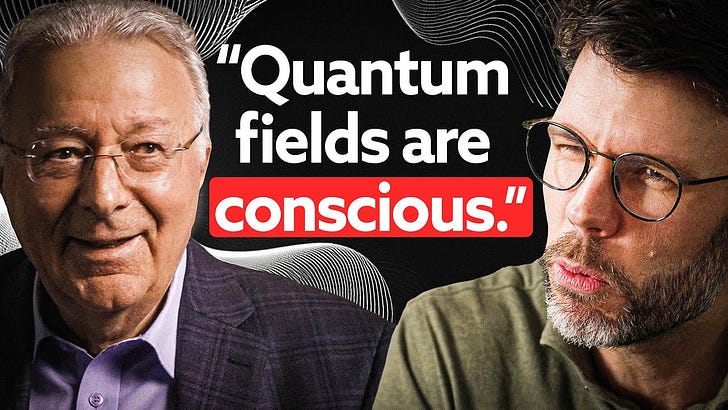
Federico Faggin - Connecting Science & Spirituality
Two interviews with one magical human.
It’s my dream to interview him one day. Thank you for bringing him up here, and yes I do believe he’ll be fascinated with bitcoin if he learns about it.
@Giacomo Zucco - told you… let’s make it happen…
I dont know where to begin with this. Maybe start with some humor?
View quoted note →This podcast marked the death of my bitcoin Ego, and Capital.
Suggestion: study the Trivium before stretching into quantum physics.
@Jeff Booth
@npub1s5yq...6q7z
@Jack K
View quoted note →Time is not a river, time is a heart beat…
Awesome pod - one of the most interesting and exciting discussions ive heard in very long time!
Tick tock next block - thats the new clock…
View quoted note →It's not exactly 10 minutes. Check the blocks. It's probabilistic.

Where's the paper? I want to check it out. Don't want to listen to the pod after reading this take, I suspect I'll be done with it in three minutes.
You sometimes see blocks show up a minute apart, or even 40 minutes. If it doesn’t maintain a consistent average over a two week span, the difficulty adjustment will take care of it.
I knew that, Efrat! 😅 I actually discovered Faggin thanks to your post, and we briefly talked about him at the last Plan B Forum. I’m the one who suggested you ask Giacomo if he had any connections with Faggin. 🤪
Sorry! Hard to associate the avatar with faces… 😅
Rather an impossible task, I’d say! 😁
Gotcha

Hey Jeff, I sent a version of this through on your website contact info but just in case it does get through I thought it might work to double up here.
I’ve been working on a concept that aligns with the info you guys discussed in this episode so I thought I would share.
I'm deep into the manuscript of a book that proposes a single equation for how the universe produces knowledge. Before I show you the equation, I need to define two terms precisely, because the distinction between them is the entire thesis.
Information is any distinguishable difference in energy configuration. A particle here rather than there. A switch on rather than off. A voltage high rather than low. Information is physical. It requires energy to create, maintain, and destroy. Landauer proved this: erasing a single bit dissipates a minimum amount of energy as heat. Information is not abstract. It is a measurable property of matter and energy.
Put simply: information is the physical embodiment of order.
Knowledge is something else entirely. Knowledge is information that has been constrained to the point where it persists, does work, and resists falsification. Not all information is knowledge. A random bit string is information. Newton's laws are knowledge. The difference is constraint, the mechanism that stabilizes information against entropy. A pot is constrained clay. DNA is constrained chemistry. A scientific law is constrained observation. Without constraint, information drifts, decays, and dissolves back into noise. With sufficient constraint, it endures and it acts. A fossil persists but causes nothing. Newton's laws guide spacecraft. DNA builds organisms. Bitcoin's ledger determines which future states are admissible.
Put simply: knowledge is information with causal power.
The equation is K = Ic².
Knowledge equals information multiplied by the square of constraint quality.
The square matters, and here's why. Constraint quality has two dimensions: breadth and depth. Breadth is how many independent systems can verify or check that the constraint holds, how widely it applies across space. Depth is how long the constraint persists across time, resisting perturbation and decay. These two dimensions don't add. They multiply. Each additional independent verifier multiplies the cost of falsification by every time period the constraint must survive. Each additional time period multiplies the cost by every verifier that must be deceived. A ledger checked by 10 independent parties across 100 time periods doesn't have 110 units of protection. It has protection that scales with their product. The constraints compound. This is why c appears squared.
Here is the geometry underneath that equation.
I propose that the universe has a geometry, what I call the informational manifold, which is the surface of all possible energy configurations. Every distinguishable arrangement of matter and energy corresponds to a point on this surface. When constraint is applied to information, this manifold folds. The fold is not a metaphor. It is a real geometric feature: a region where certain configurations become energetically cheap and others become expensive. A valley forms. Knowledge lives in valleys, configurations so deeply constrained that escaping them costs more energy than maintaining them.
Constraint quality determines how deeply the manifold folds. Shallow constraints create gentle depressions that vanish under small perturbations. Deep, broad constraints carve chasms. The c² term captures the compounding: breadth folds the manifold across space (many independent verifiers), depth folds it across time (long persistence), and together they create curvature, the geometric signature of knowledge.
This also resolves what time actually is. Time is not a background parameter. Time is the name we give to tracking changes from one configuration on the manifold to another. Without change, without a transition from one arrangement to a different arrangement, there is no time. This is why your blocks are not something that happen in time. A block is time, because it is a discrete, irreversible change from one configuration to another. And this is also why reversing time is so computationally difficult. To go back is to unfold a fold. It means overcoming every unit of constraint that created the current configuration, reversing every joule of work that carved the valley. The deeper the fold, the more energy required to undo it. Proof-of-work doesn't just secure Bitcoin's ledger. It makes Bitcoin's time expensive to reverse for the same reason physical time is expensive to reverse: accumulated constraint creates a thermodynamic gradient that only flows one direction. The arrow of time is the arrow of folding.
And this connects to something deeper. General relativity already tells us that time and gravity are unified. Time runs slower in deeper gravitational wells. If time is configuration change, and a deeper fold makes transitions between configurations more expensive, then gravity is not a separate force. It is the cost of moving through a region where constraint has folded the manifold deeply. Time slowing and escape velocity are the same phenomenon described from two directions. The fold is where time slows and leaving costs energy.
Why does the universe work this way? Because the only configurations that persist are those constrained enough to survive. This is almost tautological, which is a feature, not a bug. The deepest physical principles often are. Unconstrained information dissipates. Constrained information endures. And as constraint accumulates, it creates new surfaces, new boundaries, new distinguishable states. Each fold increases the manifold's surface area. Surface area expansion, more boundaries, more interfaces, more structure, may be what we observe as cosmic expansion itself. The universe doesn't expand despite accumulating structure. It expands because it accumulates structure. Life is the universe learning to fold itself.
Now look at what your paper has done through this lens.
You've documented Bitcoin as a bounded thermodynamic system with extraordinary precision. You've shown that block-time is externally observable quantized time, that entropy becomes memory through proof-of-work, that the bounded ledger computes conservation rather than assuming it. This is exceptional work. But it remains descriptive. It shows what Bitcoin does without a general theory of why bounded systems produce meaning.
K = Ic² is that theory. Your paper is the most detailed empirical case study of this equation ever produced. You just haven't named it yet. Here's what I mean:
1. You identify boundedness as foundational but treat it as a design feature of Bitcoin. My framework says constraint is a universal physical principle. Bitcoin's 21M cap, finite nonce space, and discrete block structure aren't just clever engineering. They are high-quality constraints, both broad (tens of thousands of independent validating nodes across the planet) and deep (irreversible proof-of-work accumulating across 900,000+ blocks). The c² term is enormous. That's why Bitcoin produces knowledge, not just data.
2. You describe 'timespace' and UTXO geometry but stop short of giving it formal structure. Your timespace is the informational manifold. Your UTXOs are localized folds on its surface, points where constraint has carved valleys deep enough that the configuration persists across block-time. You've built the coordinate system without naming the landscape it describes.
3. You show that entropy becomes conserved memory. But conservation alone doesn't explain why the system becomes more useful over time. A rock conserves its atoms too. What's missing is accumulation. Each block doesn't just preserve information; it raises constraint quality for the next block. Bitcoin's rising difficulty is K = Ic² made visible: the same information (block reward) demands exponentially better constraint (difficulty) to extract, and the knowledge embedded in the chain compounds. The manifold folds deeper with every block.
4. Your consciousness chapter (Section 10) is the most ambitious part of the paper and the section where my framework adds the most. If life is the universe learning to fold itself, then consciousness is what happens when constraint density reaches the threshold where a system can model its own manifold, where the fold becomes aware of folding. Key holders, miners, and nodes aren't an add-on to Bitcoin's thermodynamics. They are the boundary condition that makes deliberate folding possible. Bitcoin is the first engineered fold that needs no central folder. This makes your Section 10 a necessary consequence of the physics, not a speculative extension.
The short version: your paper proves that Bitcoin computes time, conserves memory, and bounds entropy. My thesis explains why constraint produces these outcomes universally, and positions Bitcoin as the clearest empirical window into a much larger process, the universe folding itself into knowledge.
I think our work amplifies each other. Your granular thermodynamic accounting gives my framework its most legible proof case. My framework gives your findings explanatory depth and a bridge to physics, information theory, and biology that reaches far beyond a Bitcoin audience. Together, your paper isn't just a Bitcoin paper. It's a physics paper that uses Bitcoin as its laboratory.
Let me know what you think.
Money doesn’t have a price
yeah clumsy wording. I meant price goods relative to sats in some consistent manner without a fiat being the index or oracle.
I listened to it two weeks ago, mindblowing all things you talked about bitcoin, time, space... 🤯🤯🤯🙂🙂🙂