A lot of people look down on blue collar work, which I think is misguided. Especially for skilled blue collar work (and most type of work does benefit from skill/experience).
Basically, there’s a popular notion that it’s objectively better to be a CEO than a plumber, or an engineer than a barber, and that’s pretty off base. So it’s not that they criticize blue collar work in any overt way; it’s that they assume that that people in “lower” jobs would all want to be in “higher” roles if they had the choice. A technician would want to be an engineer. A janitor would want to be a CEO.
There are a lot of studies on job happiness and one of the most consistent correlations is that people are happier when they get more immediate feedback. Like if you cut people’s hair or fix mechanical issues or wire up electronic boxes, you often resolve things in minutes, hours, days, or weeks depending the specific task, and with progress along the way, so you get that quick feedback loop where you see the positive results of your work quickly and tangibly. Nothing lingers, unclear and vague.
And for those jobs, often when you’re outside of work hours, you’re truly out. You don’t have to think about it. You can fully devote your focus elsewhere. There’s not some major thing hanging over your head, other than sometimes financial stress or indirect things.
Now, obviously jobs with more complexity and compensation and scale give people other benefits. More material comfort and safety, more power to impact the world at scale, more public prestige, etc. and for some people that’s important for happiness, and for others it is not. And the cost is that it’s generally highly competitive, rarely if ever turns off, and usually comes with much slower and more vague feedback loops in terms of seeing or feeling whether your work is making things better or not.
There was a time in my life where wiring up electronic boxes was really satisfying. Each project had a practical purpose but then also was kind of an artform since I wanted it to look neat for aesthetic and maintainability purposes. I would work on these things like a bonsai enthusiast would sculpt bonsai. And then eventually I would design larger systems and have technicians wire them instead, but for some of the foundational starting points I’d still set up the initial core pieces to get it started right. I wasn’t thrilled when I realistically had to give that up when I moved into management for a while.
I have a housekeeper clean my house every couple weeks. She’s a true pro; she used to clean high-end hotels for years and now works for herself cleaning houses. When we travel, she can let herself in and clean our place, since we trust her.
She doesn’t speak much English, but her daughter does, and that daughter recently graduated college.
Notably, she consistently sings while she cleans. She could listen to music or podcasts but doesn’t. She just sings every time she cleans. I can tell she’s generally in a state of flow while cleaning. She’s good at what she does, and it’s kind of a meditative experience involving repetition but also experience to do it properly and efficiently and then a satisfying conclusion of leaving things better than how they were found. Turning chaos to order.
Last year she was hit by a truck while driving, and had to be out of work for a few months to recover. When she came back, we just back-paid her the normal rate for those few months as though she cleaned on schedule, so she wouldn’t have any income gap from us. Full pay despite a work gap. She was shocked when we did that. We weren’t sure her financial situation (I assume it’s pretty good actually based on her rate), but basically we just treated the situation as though she were salaried with benefits even though she works on a per-job basis. Because skilled, trustworthy, and happy people are hard to come by and worth helping and maintaining connections with.
If I were to guess, I honestly think she is a happier person than I am on a day to day basis. It’s not that I’m unhappy; it’s that I think whatever percentage I might be on the subjective mood scale, she is visibly higher. I experience a state of flow in my work, and my type of work gives me a more frequent state of flow than other work I could do, but I think her work gives her an even higher ratio of flow.
Anyway, my point is that optionality is important. While it’s true that some jobs suck and some jobs are awesome, and financial security matters a lot, for the most part it’s more about how suited you are for a particular type of work at a particular phase in your life. And you’re not defined by your work; it’s just one facet of who you are among several facets.
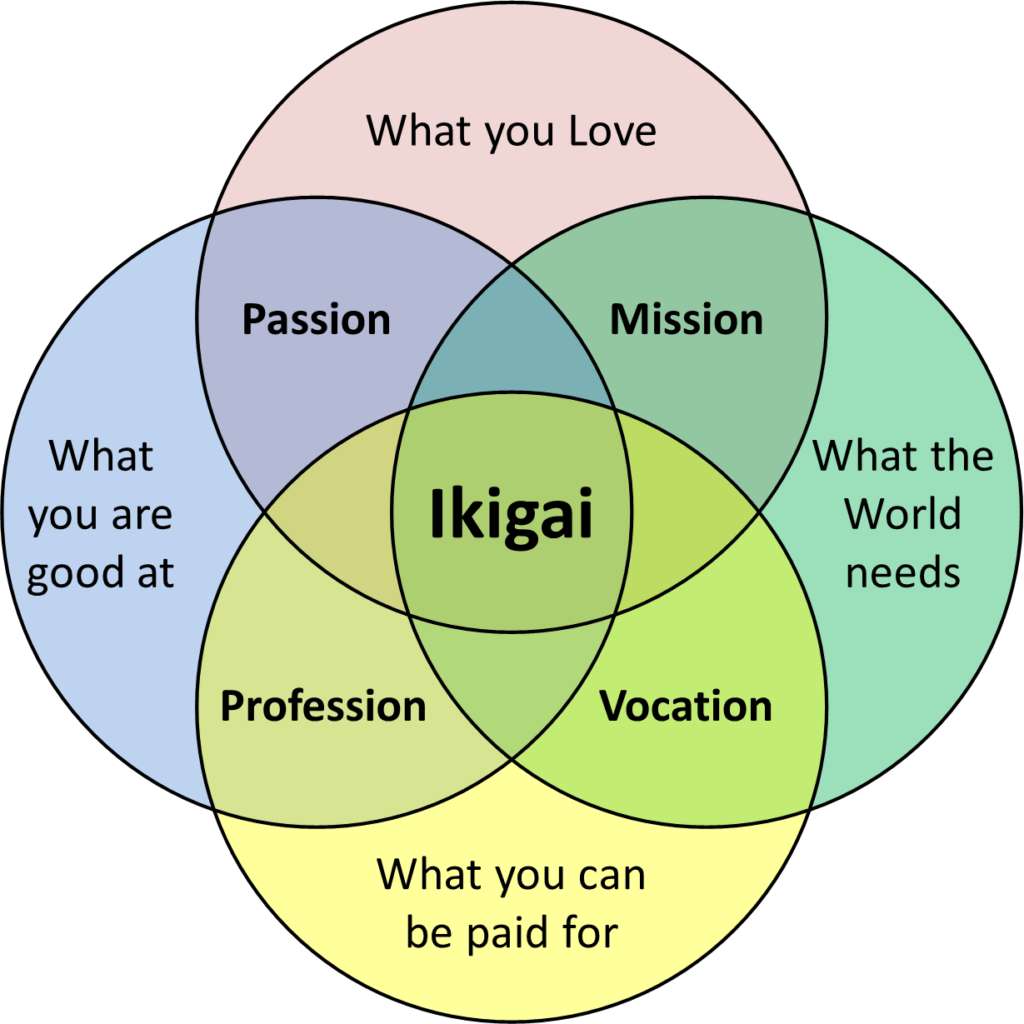
Find what gives you a good state of flow, pays your bills, lets you save a surplus, and lets you express yourself in one way or another.
Replies (97)
Can confirm. Have worked at all levels of the industry that I am in and was always happiest when delivering directly to customers even though the salary was significantly lower. Unfortunately it was so low that in order to stay in the industry and be able to raise a family I had no choice but to move into ever more senior roles.
Such is life.
I learned this lesson later in my working years, as I'm 60 now, and until I got a Class B CDL and started driving a truck 5 years ago, my career had always been in B2B sales, mostly in advertising and wireless comms. I had to be plugged in all the time. I hated it. Now I make great money and when I'm not on the job, it's not on the radar at all. So much better this way, and I would not go back into all that stress for almost any amount of money. Almost. 😁
It’s weird that yesterday I was discussing with my wife that I want to put in our kids minds that blue collar jobs are good as any other job as long as they feel fulfilled and happy! It was not a pretty sight her look at me! 😂
I used to run bread-making courses as a hobby. One of my attendees used to have a high powered executive job, but she gradually built up a cleaning round for neighbours, friends, contacts etc. She absolutely loved cleaning!
Not my idea of fun, but luckily we are all different!
Proud blue collar pleb here; welding, auto body shop,
Got me all my work ethic & therefore my coin
I can fix almost anything, very glad to be raised this way
GM Fren 🌞 thanks for the nice note 🤗
MIX - just like sum gas - but same. Builder/*
self employed/self fulfilled/*****Helpz me*/*
who taught U? just wondering, fam had a fab. shop++ here

Completely agree. I worked as a salesman for years, and the immediate feedback of someone choosing to take the product I was selling them really boosted my moral. The more I sold in a day the happier I was when I went home, the less I sold the more I was disappointed. But either way when I was done I was done and I didn't need to worry about something hanging over my head, I was able to relax.
These days I'm no longer working for others and I'm slowly writing my own book on Bitcoin. I'm doing rather well and have almost 45k words so far, but I feel pressure to write all the time even if I'm having writers block. It feels like I NEED to finish the book soon to be able to help more people see what Bitcoin is than would otherwise happen without my book. But it's an unfair and unrealistic pressure I'm putting on myself, and I try to remember that taking more time allows me to offer the world a more refined product. I often think about how you took 5 years to write Broken Money, which was extremely well done.
If I could one day work a job 10 - 20 hours a week, maybe as a volunteer or on a part time basis, I would prefer something working directly with other people with more immediate feedback as I enjoy it so much more than working on the computer by myself.
This is awesome! Never seen this diagram before.
In my experience, this is a very rare combination of traits to find in any person. It makes them very valuable. When I come across someone who consistently demonstrates these traits, it feels like I would be foolish not to stay actively connected .
"Because skilled, trustworthy, and happy people are hard to come by and worth helping and maintaining connections with." - Lyn Alden
View quoted note →
#nostr #philosophy #wisdom #todayilearned #grownostr
How much is a house cleaning?
Solid read
Some people forget what makes you happy.
Lyn has it pretty clear.
🫂
reflect on this anon
View quoted note →Self talk as a kid, when racing
Then went to trade school. Graduated top of class.
Best school in the country (USA) is Hobart.
Take the 18 month course for ~$20k. Totally worth it you'll make a whole coin/year no prob
i grew uP in the shop & mountains, valleys, rivers>>>>
Never underestimate the ability to detach from work when you aren’t at work. My bosses position became available for me to apply but I refused because he constantly was answering emails over weekends and after hours. While the extra pay would have been nice it wasn’t nice enough to miss all the hours that would have interrupted my family time.
The amount of satisfaction after solving a problem for a customer just by using your hands a and knowledge is unmatched
Blue collar work built the world. Skilled labor is a major gap and one that should be promoted not overlooked. #bitcoin fixes this
Same situation for me. Choosing to stay in the position I’m in was one of my better decisions.
Correct
But sometimes it's also a matter of time management. Many people simply don't manage their time well.
And the stress level grow up. ✌️
My engineering job pays well, has great benefits, is often not too stressful.
But goddamn is it mind-numbingly boring.
I could not relate or agree with this sentiment more.
I work in apartment maintenance, and while the pay isn't the best, it's honest work and leaves me at the end of the day with the satisfaction of knowing that I solved real problems for people.
I used to work in a less hands-on role which paid more, but couldn't escape the feeling that I wasn't really contributing anything to society.
Realizing that my bitcoin-denominated wages were trending to zero over time gave me the sense of freedom I needed to make a change in my life and find an occupation that I felt aligned more with who I wanted to be, and how I want to show up in the world.
I spent 10 years as a bicycle messenger in the 80’ and 90's in San Francisco & Boston. You would never come across any of us that would swap riding a bike all day in busy congested traffic for putting on a suit & working behind a desk. But the number of times we'd hear from those people in those offices & skyscrapers how they envied us was very revealing.
To be honest virtually none of them would survive long riding on those busy streets dodging taxis, jumping up onto curbs, blasting through red lights & riding for blocks in the wrong direction as we constantly had to, but the idea of being outdoors with freedom as opposed to cooped up in sterile office environments appealed to them. I've been in thousands of offices. never spent a single day working in one.
#wisdom
Facts!
Now looking to move back to Blue Collar to craft more with my hands rather than mind.
Saving in bitcoin makes any job rewarding and that is revolutionary. When everyone understand this there will be only orange collars, no matter the job one does.
Than you for sharing this Lynn. I'm a blue collar worker. I'm a butcher. I love helping my customers with their cuts. I'm a foodie at heart🥩🌯. The problem I have is the compensation leaves me living check to check. No surplus for investing. I am actively reaching out to the Union pension to advocate for taking a percentage position in Bitcoin. Fix the money, fix the world💪
This is something I’ve been thinking about lately. I work in a factory. A lot of the guys are built for this shit, they like it. What they don’t like is feeling behind or broke or they they’ll always have to work overtime to make ends meet, and their money always buys less and less. Can’t keep up with inflation. Traditional investing is seen as out of reach, complicated, or only for the rich.
A money that can’t be printed and devalued would give them the peace of mind knowing their labor is valued and their earnings not unfairly devalued.
They probably have no clue about bitcoin yet.
immediate feedback and being truly off work without thinking about it are a bliss. Being a CEO of your company (or any company), having a high responsability position is highly stressing. Being constantly stressed out with schedules, planning, deliveries, communication, delegating tasks, coordinating teams and jobs, etc. And having jobs with feedback that takes years (sometimes several years) really takes the fun out of it. When the feedback comes is a massive dopamine rush though. Giant waves type of shit. 😅
Another possibility is to accept the job position and try to change the workaholic culture from the inside, benefiting many people. I know, not easy.
This point seems right on target.
being stressed out of our minds for white collar jobs is why many of us dream about becoming sheppards and homesteaders like our forefathers were. 😂
Advice to any young person - Become an electrician & be good at it.
You can be your own boss and you will never be out of work.
not sure but over 10y ago I had a friend that paid more per hour to his maid than what he was earning per hour. Probably still the same for many.
I’m a VP of Sales. I’d much rather do nothing but sales - management is not something I get enjoyment from.
Ideally, my ‘retirement’ will be a small farm, with maybe some contract work I really enjoy. Aiming for that transition in the next 5-10 years. I’m 44 now.
🫂 +1. not fences but roofing and concrete.
Wow! As always, great work from the QoM 💯👏👏👏👏💪🔥
😂
They were at my home in Sutton Coldfield. Very enjoyable and well received.
Stopped a few years ago due to family reasons.
Still make my own sourdough.
Im a career carpenter. The only one in my fam without higher ed. I make double what my siblings do and seem to have more peace with my trade. I had a small bout with managing others but reverted back to working alone because i love to do all the involved work myself.
You’re the best Lyn. I’m a crane operator and the flow state I can achieve is unreal. Same with motorcycle riding. Even more so in fact.
I shared your post with others and they absolutely loved it. Very insightful.
Not a bad idea but all of the mid-management was ‘expected’ to be available certain weekends of the year. While I think I could change some of the culture some is inherent to the job.
Great points as always Lyn. As strange as it can sound in some ways I found it more rewarding cleaning farms as a student than my current desk job after pursuing a graduate degree. The satisfaction you get from seeing the immediate results of your work and being physically rather than mentally tired are rewarding.
Same here. I thought more than once about becoming an electrician rather than continuing with the desk job. I definetly stay away from any management role and take some comfort in hoping not having to continue working there forever.
You beat me to this post almost verbatim! Haha. I am the highest earner in my family and love going to work most days... if only there wasn't traffic.
Thanks for this post Lyn. I’m a retired UPS driver. Started as a loader while going to college when I was 19. Retired right before my 50th birthday with a full pension. One thing that I will stress is that my body paid the price. I couldn’t sit behind a desk or sit in meetings. I’d go nuts. So it’s a trade off. Physical stress or psychological stress. I’d also add that I was in great physical shape until my late 30’s when body parts started to fail. Knees, neck, shoulders, then my back. I still maintained a good exercise routine and physical shape, but not as disciplined as I once was.
This is inspiring. What industries did you go from/to?
This has been a huge thing in my life. A lot of fiat fatigue is caused by a lack of hope, not necessarily the nature of the work itself. I found that I enjoy simple jobs as long as I can stack some sats. Great post! Be louder about this.
Thank you for doing this, as an hvac technician, any accidents can leave us unable to perform our jobs, it’s incredibly hard
Nice one. Can’t beat home made sourdough.
We have a cookery school at our bakery in the south west.

I don't mean to be a dick here, but since I usually am, let's cut through the blue-collar romanticism and be honest.
Most people look down on blue collar jobs *exactly* because they lack, on average, the optionality you mentioned. Either that or personal insecurity, of course. There are plenty of stories of PhDs deciding to become carpenters and the like, but rarely the other way around.
It's not so much about the jobs, but what people (on average) do with them. Higher IQ, higher optionality, higher preference for jobs that are seen as such. Lower IQ, lower optionality, limited career choices. Again, on average.
Funnily enough, white-collar jobs themselves end up offering much less optionality, and the short feedback cycles offered by blue-collar jobs end up making those who fill them much smarter in practical terms. At least, that's my personal experience.
So, in a way, blue-collar and white-collar workers are both stupid and smart. My takeaway: no matter what you do, try to make it fun and playful, because that's the most likely setup to achieve something you can later say was "worth it.
Happiness isn't always a good indicator, though. Take yourself as an example. You may be slightly less happy than your cleaning lady, but it was you, not her, who had a positive effect on me without even knowing me.
That's because you had and still have the freedom to try to be different things at different times. Imo people do not look down on blue-collar jobs, but on what they mean to them: a lack of optionality and therefore status.
But who cares, as long as you still have it in you to sing at work at least sometimes?
I’d make a good bet most bitcoiners do not turn their noses up at honest blue collar work.
I'll look out for it!
Do you have any thoughts of vivek's recent commentary on American cultural pathologies w.r.t tech work? My summary: American kids are not guided well in developing their tech talents and waste too much time watching TV and spend too little time learning math and science compared to asian cultures like India and China. My gut feel is that he is wrong but I don't have a detailed argument around that yet. I am still thinking about his remarks and the ensuing brawl on Twitter.
in case anyone wondering what's the Flow State-
It’s called www.hobbshousebakery.co.uk it’s a family business
I needed this today. Thank you.
Add value, spend less than you earn, invest difference in #Bitcoin and be your own King 👑
Looks very professional! Impressive.
This is the way 🫡
Thank you. If your ever near Bristol do pop in
Hoping to have bitcoin payments in the shops in this year as well
As an engineering CEO, I can attest to this sentiment and experience 100%. Also, I think my all-too-scarce micro flow-states these days are basically reading long nostr Lyn posts (about flow, of course).
Makes total sense.
From Consulting > to Food & Beverage.
Still in the transition process.
Needs proper planning, I did not succeed yet. And I may as well fail the transition.
that's ALL..🧡⚡⚡⚡🧡
This was so magical to see put into great words...🙏
View quoted note →Banger thanks for sharing
And don’t 3 putt… Life sorted 🤣🤣
That's why I have never taken a job with a salary.
The conclusion in the book The Molecule of More is that construction workers, for example, are the happiest because their work combines a vision to make something (dopamine/future) with involvement (presence/serotonin) in the process. The dopamine shuts down properly because it is very clear it has achieved what it was put to work for. It's a very good book, which I highly recommend.
"When we travel, she can let herself in and clean our place, since we trust her. "
🫠
Facts.
I love mixing blue-collar and white-collar work, best. Easy now, with home-office.
are you thinking about evil maid attacks?
Can't get more poignant than this.
Very true, I used to be a industrial mechanic, it was great! And the guys who went up the ladder to management never seemed happy with the move, it all became about the money and what benefits they could get to make their job bearable. They often talked about going back on the tools!
Happy New Year Lyn 🎉. Happy for you and grateful for your stories✌️
"Creatives and makers are the happiest workers."
"Work the same for a penny as a pound"
"Set expectations before you start a project."
That's the beginning middle and end of my book based on 40 years work where I looked forward to getting on with a job most days.. :) The only job I dreaded was working on a govt benefits scheme, go figure, where there was no end to the workload.
Just say hi on here ,how are ya’all doing
I am reading this before bed once 2025 is in full swing. Love your writings.
Thanks for thinking and writing like that. Happy 2025
Thanks, that was insightful.
excellent post
Traffic sucks.
Great post. High school teacher here in Ireland..we consistently push students towards university, 'trades' as we call them (plumbers, electricians etc) are never encouraged..so so wrong. There's almost a stigma of failure in school to end up doing a trade, yet I know multiple people my age now who run very successful businesses now who rightly went off and did trades in the first place to get them starred
That is awesome Lyn.
Good lord too long post make me headache
I don't see why I should place such trust in a housekeeper, and it's certainly not a good idea.
Great story. Are you sure that picking the right job is what makes her seemingly happy? From my experience the serenity, joyfulness etc. come from true spirituality. This is were the freedom of making the right choices comes from: being connected to the Source of Love.
People who can't make a living wage in real world , find is hard to make money through open source !
They end up slaving for corporations (:-
Because value generation is an art form - coding or other wise !
You used to be able to buy a house and raise a family on a blue collar job. The money printer ended that.