Replies (102)
Natural sun light & candles
At least find some fake skulls to put some of them in. Don't buy the real ones though.
Also good for mitochondria. We evolved on a planet around a red giant.
The hate for led lights is unwarranted Luddism. While they certainly are not the end all be all that they were proclaimed a decade ago, they are superior in virtually every way to incandescent bulbs.
...that want to see everything burn
If it's truly yours you can still sell it!
That's the optimum.
Little human ones?
Ah! I checked my notifications out of order 🤣
That too.
It's the worst.
My cats manage to avoid the candles. Mostly. My boy is so clumsy. He can’t see well.
💯
Incandescent 100%
ws2812b
I’d like to see these back in streetlights and vehicles as well!
Inside your house, wherever you spend the most of your time, you should use exclusively incandescent. Anywhere else, like closets, outside or the cellar, LED is fine. Your body NEEDS the near-IR light and we don't get enough of it because we don't have woodburning fireplaces and we don't go outside.
If you use red LEDs, you can also use the room as a darkroom and develop prints.
Fair, but incandescent has truly rubbish efficiency, and electricity is no longer cheap.
Gas-discharge metal halide lamps will give you a better spectrum even than incandescent, and at an efficiency that equals or beats a lot of commercial LEDs.
They're more expensive than either, of course, and they don't come small unless they add xenon and then the price goes higher still.
I use them where possible.
LED. The real ones are tiny, tiny tungsten coils if you zoom in.
I have a few for the ambience, but they're not daily drivers.
You can efficiently give yourself cancer by witholding the "inefficient" IR heat.
I think we often associate incandescent with low light temperature, which seems to be better overall for things like circadian rhythm etc. While cost wise, incandescent isn’t as efficient, I would love to see more of that color spectrum back, over the bright white of most LED’s that people are switching to, in their homes especially.
What lamp do you usually buy to avoid UVC but with a good spectrum in IR?
Yeah, its total BS government micromanaging of people's choices.
Incandescents are import-controlled contraband here. I've still gotten a few in, but some Chinese marketplaces have stopped selling them.
I bought some cases. About 1000 lamps for the next years
UV-C won't pass the glass envelope in any meaningful quantity. Not unless the glass has been engineered for it (sterilising mercury lamps).
UV-A does, but that's not a bad thing.
IR is present in a very broad spectrum. Glass, even cheap sodaglass, has good near-IR transparency.
its not a coil bulb.
ok too many millennial experts.
on to more important things
You dont get uvc from incandescent. To get uvc from a fluorescent (mercury plasma) bulb, you need it to be void of phoaphor and made with a quartz tube. Otherwise, UVC is only present when you are in proximity to welding. Uva and uvb are what you get sunburn from, and what gives you that unpleasent tingling when you're in direct sunlight at high-noon. Its best to avoid direct sunlight mid-day and stay in shade amidst greenery, because Rayleigh blue-scattering is minimized at that time of day.
I have many halogen bulbs (metal halide) but only because i couldnt get incandescent
I am beginning to think the vitamin-d deficiency is a huge debacle, reversal of cause and effect where D3 is a byproduct of UVB ionizing stress and an indicator of sunlight exposure more than an overall indicator of health
The ir spectrum of incandescent matches full-sun more than metal halide. Its the green and blue light component of halide bulbs that provide a higher color temperature, thereby simulating a higher filament temperature. The old "daylight" incandescent bulbs largely only filtered some of the red light, also simulating a higher temperature. Nonetheless, halide bulbs are a suboptimal light source, particularly at night from a IR health perspective.
I understand that is the current concensus on the topic, however no science is settled. Regardless, I won't suggest anyone act on mere speculation on vitamin D being unnecessary since it certainly can't hurt and more likely helps.
If you compare total energy magnitude of incandescent, halide and late afternoon sunlight under typical circumstances, the incandescent yields almost twice near-ir than halide, and this even with low frequency kurtosis. Of course this should be obvious since the total electrical wattage is also almost double.
Novelty bulbs like the above mentioned Edison bulbs are usually exempt
why red 🤣 how bout pink? he he 😂
Annoyingly, here in Australia I can only buy "fake" (LED) Edison globes now. No tungsten coils...
Should start a black market... :)
My solution is to use a 3in1 lamp base expander and just put 3 halogen bulbs in place of the one incandescent.

Its true the sun radiates both atomic excitation emission frequencies and blackbody radiation, more akin to the halide group.
I would be surprised if monochromatic was healthier than even the most average LED warm white bulbs.
I want bulbs with as many lumen as possible and I would want an extreme brightness screen so I can comfortably see it even against a bright window at noon. Locking light out during the day so you can see the screen is probably as bad as having much blue light late at night.
That said, I almost never have issues falling asleep.
Take a spin and read some of the studies, seems skin and eye benefits in the ~650nm range. You can have warm light 2700K-3000K that is not in the 600-700nm range and does not seem to show benefit
I'll have to check it out.
Bunnings and major supermarkets only carry the fake ones. Even my favourite shady Chinese discount store ran out.
TBF, this may be LED too: 25W doesn't sound like a big novelty incandescent
If any specific wavelengths matter, LEDs will either have to produce all of those or there's no alternative to an incandescent light. But I suspect the human genome mostly developed absent any artificial light, including fire, so it's probably healthiest to get out during the day and sleep at night. It's not the most productive, especially where nights are long but that's kind of what we are built for.
25W would be an extremely bright LED. LED bulbs are like 5 or 7.
No doubt getting out in real sunlight is best, we are in full agreement on that
Just incandescent ones since everything else was pretty expensive for some reason
youve been Kruse pilled.
i found a weird solution, thats not for everyone. some work lights on amazon have a red light setting, and a magnetic base. i use those.
Yes the led "filament" bulbs are utter flickery trash. They also lack spectrum in the yellow and far red region rendering them depressingly dim.
Proclaimed superior by moronic tech geeks, LED manufacturers and the scientific governmental complex sponsored by chinese industrialists.
And anyone that installs lights of all kinds for a living
This photo looks like a genuine edison bulb, but try to buy one and its the simulated LED filament trash
You know, not that long ago they piped gas to every room for light fixtures. That's why the old-style chandeliers have gas-valve keys
I know all about that. My dad was a professional light bulb salesman and installer. That's a whole different story, now you're bringing commercial lighting into the mix. I'm only concerned about domestic lighting.
If you went that route, now youre dealing with natural gas contaminents. You'd only want to burn propane in a situation because its a refined petroleum.
Regular led bulb > regular incandescent imo
They fail less and have less duds out of the package(in my extensive experience) and don't heat up to dangerous temperatures (which causes many issues beyond the fire hazard). They also use 1/10th of the power
The positives for incandescents are that they don't dim as much over time and they are cheaper to make.
The things I care about as an electrician are the things in column A.
I used to be in your camp. Efficiency and longevity was my primary concern. Then I learned about intracellular photosynthetic production of melatonin.
Also, as soon as they started sponsoring the CFL bulbs, the incandescent bulb quality went through the floor and what would last years started lasting months.
you can still find incandescent ones like this at certain hardware stores
Was the insane person Jack Kruse by any chance? I haven't worn sunglasses since going down that rabbit hole. We use incandescent bulbs in lamps around the house after the sun goes down and it is a major improvement on bright led lighting.
This is a good resource from a company that helped us enforce our house.
Subscribe and receive our Healthy Lighting Guide
Emf-proof, not enforce
If not candles cos furry and other mini beings, then salt lamps and Edison filament bulbs all the way
@Gigi Yeah, that's about as interesting to me as astrology. Light is light. What changes is the spectrum and that can be set at any wavelength with LEDs. There is no meaningful amount of anything else radiating from an incandescent light. The fact that it's a piece of molten tungsten doesn't make the light different than a cold diode of the same color.
Ok. I guess I don't know what I'm talking about. Next time I'll call my electrician before I read any scientific literature.
I use candles every night.
Yes I know. I deliberately use mercury plasma to create disinfection lights. I was speaking about the metal halide lamps. I could not find the spectrum of any but some that are sold as full spectrum specify that people should not spend there more than few minutes because of the UV. So the question is. Is there one or more full spectrum minus UVC on the market, not for plants only.
Some specify of the dangerous UV emission because they are for growing plants. Are there some specific brand and model that have a full spectrum from deep IR to UVB with no or little UVC and a spectrum similar to the solar one?
UVC is highly carcinogenic. You don't want to be exposed to anything that emits it, even for a few minutes. It can also burn your corneas and cause blindness. UVC doesn't occur naturally on Earth because it is filtered by the ozone layer, scattered by the Rayleigh effect, and absorbed by oxygen gas. Metal halide bulbs, which are mercury vapor bulbs, do produce UVC, although they have a coating to absorb most of this spectrum. I was mistaken in earlier posts, confusing halogen with metal halide. Yes, you do not want to be in close proximity to metal halide bulbs, not only because of some UVC emission but also due to their intensity in the UVB and UVA spectrum.
Snark all you want. If you think your incandescent light bulb has some kind of health benefit, I have a bridge to sell you.
Would you say the same of sunlight?
Just to be clear, the most beneficial region emitted by incandeacent is near-IR. The specific frequencies that stimulate melatonin generation in the mitochondria is not known, but it is believed to be between 700 and 1100nm
I use UVC to kill bacteria and mold. 10 minutes is like exposing something to the sun for one day
Ah yeah, I watched that one in Prague.
not sure the make butt i have xtras
The sun is not a small band of glowing tungsten. Troll harder
Jack Kruse will help you.to understand
Are you going into prostitution? Streaming sats for live shows ? Always pushing the boundaries for us 🤙
👀
Phillips makes a nice line of colored LEDs. They're a little pricey, but they last forever and use very little electricity.
Still the orange ones.
Don’t do it! I literally have to use my phone to find anything in my house now, as I have done exactly this 😂
R u listening to Jack Kruse?🤔
Westinghouse 25W
definitely replace your lightbulbs. Jack Kruse is not insane.
Blue light is evil and so is MK Ultra
4 hours if you have the time. He was also at BTC Prague
View quoted note →great thread:
I love it here 😂
@Brunswick
 Gigi
Gigi
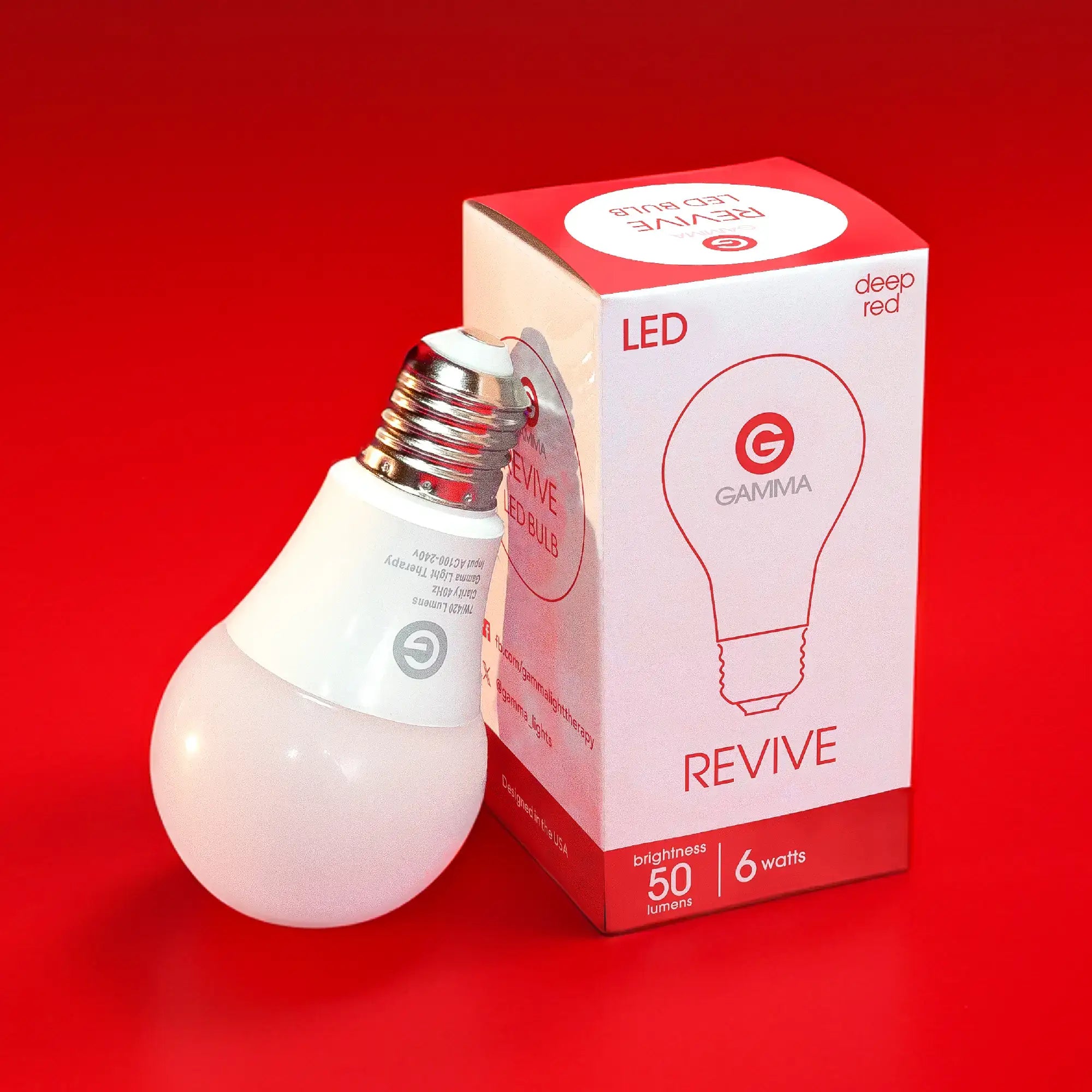
Let's say I listened to an insane person for 20 hours and now I want to replace all my light bulps with red ones that are super dim. Which ones should I get? #asknostr
View quoted note →
Wait what is this all about
There is a reason why I am not online all the time. For some of you, I get it, its your job. However, social media addiction is a compulsion and can leads to increased levels of anxiety, which is just not healthy.
The Blue light doesn't help with sleep cycles, its always best to get out and touch grass. So I'm just sayin' , not trying to be aloof or anything but like get outside and do normal human things and everything in moderation.
This is also why I will never use airpods, always prefer wired headphones and less EMF when possible. Yea so being offline can make me less popular but I don't really care. I do care about my well being and everyone around me. cheerios.
Ok I put my monitors into low-blue mode.
AirPods are convenient in a daily consuming Information and doing the dishes. Even If it’s true that they are poisoning me, they help a lot in the modern world being a parent and trying to stay afloat
Jack Kruse
Since it wasn't mentioned in the replies yet (*I think...), red light only is not the solution.
You need to max out Daylight similarity.
Therefore look for lightbulbs of any kind you like with very high CRI (Color rendition index) and flicker-free dimming.
*
CRI 99 is almost indistinguishable from daylight based on spectrum perspective
Down another rabbit hole I go
Big fan of incandescent lighting. I still have a bunch of bulbs stashed (most are outlawed now here in the US). It's just about the feel and comfort. Consumer LED and florescent bulbs give me headaches and makes me dizzy, for a lack of a better word. It's that I can see the 30/60 cycle flicker. Especially when things are moving in a room with flickering lights.
I use 12v DC lamps and led strips in my office and bedroom so I don't see the flicker, I power off an ATX psu lol. My ceiling lamp has "specialty" halogen floods in it (probably can't get them anymore) and my reading lamp is incandescent.